Packing Tips for Moving: How the Pros Box a Whole House

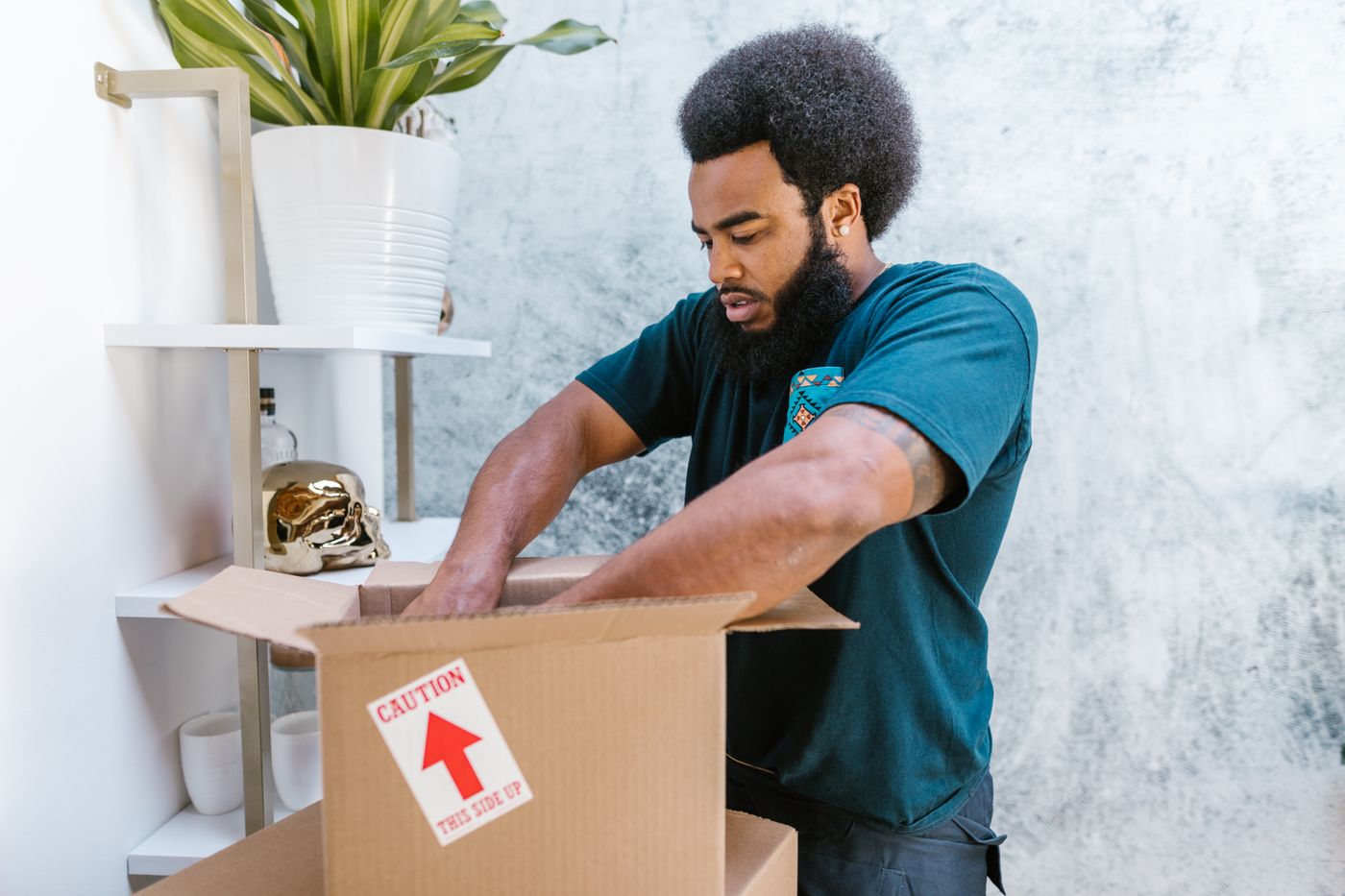
Professional packers can box a three-bedroom house in a day, and almost nothing they pack breaks. That is not talent — it is a system: the right box for each weight class, a fixed wrapping order for fragile items, and labels that tell the unloading crew exactly where everything goes. Here is that system, adapted for people packing their own move.
Get the box math right
The cardinal rule: heavy items in small boxes, light items in big ones. Small (1.5 cubic feet) boxes carry books, tools, canned goods; medium (3.0) boxes take pots, small appliances, toys; large (4.5) boxes are for linens, lampshades, plastics. A box no one can lift safely will be dropped, stacked wrong, or both. For a rough budget, a one-bedroom needs 25–40 boxes; a three-bedroom home 70–120, plus tape, paper and a marker for every packer. Crews charge by the hour, so well-packed, well-labeled boxes also directly cut your bill — see how in our moving cost breakdown.
Materials that earn their keep
Skip the gadgets; the professional kit is short. Unprinted packing paper does ninety percent of the wrapping work — newspaper transfers ink onto dishes and lampshades. Bubble wrap is for electronics, art and anything with a screen, not for filling space. Buy more tape than feels reasonable (a three-bedroom move burns through six to eight rolls) and get a real tape gun; the difference in speed is dramatic. Stretch wrap keeps dresser drawers shut and upholstery clean, and a set of furniture blankets protects doorframes as much as furniture. Total materials cost for a typical house runs $150–$350 — a fraction of the value of what the materials protect.
The pro wrapping order for fragile items
Dishes go vertical, like records — never stacked flat. Wrap each plate in paper, bundle four or five, and stand the bundle on edge in a small box on a crushed-paper cushion. Glasses and stemware get stuffed with paper, then wrapped, heaviest at the box bottom. Electronics travel in original boxes if you kept them; otherwise wrap in towels and mark the cords with tape flags as you unplug. Mirrors and framed art get corner protectors and travel on edge, never flat. Fill every void with crushed paper — a packed box should sound solid when you shake it gently. If it rattles, it breaks.
A labeling system that survives moving day
Label every box on two sides — not the top, which is invisible in a stack — with three things: destination room, number, and a fragile flag when needed. Keep a master list on your phone: box 34, kitchen, glassware. The numbered list becomes your inventory at delivery; if box 34 never comes off the truck, you know immediately and you have evidence for a claim. This matters even more on interstate moves, where our long-distance guide explains the nine-month claim window and why released-value coverage pays only 60 cents per pound for anything you did not document.
Pack in the right sequence
Start three weeks out with what you use least: storage, garage, out-of-season clothes, books, décor. Move to the kitchen’s rarely used layers, then bedrooms, and finish with daily-use items in the final 48 hours. This sequencing is built into our 8-week moving checklist so packing never eats a whole weekend at once.
Know what movers will not load
Carriers refuse hazardous materials: propane tanks, gasoline, paint and thinners, aerosols, fireworks, pool chemicals, bleach and most cleaning solvents. Do not sneak them into boxes — a leak can contaminate an entire trailer, and you are liable. Dispose of them properly instead; the EPA’s household hazardous waste guide lists local collection options. Perishables, plants and pets also stay off the truck, and irreplaceables — documents, jewelry, hard drives, medications — ride in your car, always.
The first-night box
Pack one clearly marked box (or better, a suitcase in your car) with the first 24 hours: toilet paper, soap, towels, phone chargers, basic tools, scissors, paper plates, coffee gear, a change of clothes per person, and kids’ or pets’ essentials. Every veteran mover has a story about digging through forty boxes at midnight for a shower curtain. Do not become one.
Packing FAQ
Where can I get cheap or free boxes?
Liquor stores, bookstores and grocery stores recycle sturdy small boxes daily — ask in the morning before the baler runs. Neighborhood marketplaces are full of once-used moving kits from people who just arrived. Two cautions: skip boxes that held food (pest risk) and skip anything soft or crushed, because a stack is only as strong as its weakest box. Buy new boxes for dishes and glassware; the double-walled dish-pack box is the one purchase that pays for itself in unbroken plates.
How do I pack clothes fast?
Leave dresser drawers full for local moves — crews move the dresser with the drawers taped or removed and carried separately. Hanging clothes go into wardrobe boxes, twenty to thirty hangers per box, straight from the closet rod. Folded clothes can travel in suitcases and duffels, which would otherwise ship empty. Vacuum bags cut bulky bedding to a third of its size.
Is it worth paying the movers to pack?
Full-service packing typically adds a few hundred dollars for an apartment and $1,000–$2,200 for a large home — but boxes packed by the mover are covered more cleanly under valuation, since carriers routinely dispute damage in owner-packed boxes. A popular middle path: pack everything yourself except the kitchen and art, and buy professional packing for just those rooms. Whichever way you go, verify the company itself first — run a quick USDOT registration lookup on it, then follow our nine-step mover vetting guide. When you are ready for quotes, start from the licensed movers in your state.